Prístupne 2023

18 May 2023, 10:00–12:00
online (Zoom)
the pilot (zero) edition of the conference
on digital accessibility

This is the archive of the Prístupne 2023 conference.

About the conference

Prístupne 2023 was the pilot (zero) edition of the conference on digital accessibility in Slovakia. Digital accessibility enables people with disabilities to fully use websites and mobile applications. The aim of the conference was to bring information about digital accessibility to the widest possible audience. See the programme of the Prístupne 2023 conference. It was held on the occasion of Global Accessibility Awareness Day 2023 (GAAD).

The conference was interpreted into sign language. After registering, participants received an email with a link to join via the Zoom application, through which the conference was broadcast. During the conference, participants could ask questions in the chat, which our speakers answered in the final block of the conference, or which were answered in writing afterwards.

What the Prístupne 2023 conference offered

  • Participants learned what digital accessibility is
  • Talks were given by proven experts (with IAAP certifications)
  • Participants learned about the barriers a blind user encounters on websites
  • Participants learned why expertise and professionalism matter in the field of accessibility
  • We showed the real-world impact of making websites accessible
  • We presented information about new legislation on the accessibility of websites and mobile applications
  • We answered participants' questions about digital accessibility

The Prístupne 2023 conference was intended for:

  • Public administration website administrators
  • Administrators and editors of town and municipal websites
  • Web developers and web designers
  • Website administrators of primary schools, secondary schools and universities
  • UX students
  • Library website administrators
  • Anyone interested in digital accessibility for people with disabilities

Programme

10:05–10:10

Ján Podolinský
ÚNSS, Slovakia

Opening address 1

Opening address by the chairman of the Slovak Blind and Partially Sighted Union (ÚNSS).

10:10–10:15

Branislav Mamojka
ÚNSS, Slovakia

Opening address 2

Opening address by the vice-chairman of ÚNSS, a long-standing advocate of accessibility in legislation as well as in everyday life.

10:15–10:25

Peter Teplický
ÚNSS, Slovakia

Why are we talking about digital accessibility?

Digital accessibility means equal access to technology and information for all users, regardless of their physical and intellectual abilities. Slovak legislation defines which institutions and organisations must have accessible websites and mobile applications. The Slovak Blind and Partially Sighted Union works not only with the institutions that are legally obliged, but with anyone who approaches us with a request for an audit or help with digital accessibility. At the end of 2022, the Act on the Accessibility of Products and Services (Slovak transposition of the European Accessibility Act) was adopted - what can we expect from it and whom does it affect?

10:25–10:35

Radek Pavlíček, Lukáš Hosnedl
Teiresiás Centre, Masaryk University, Czech Republic

Accessibility needs professionalism

The final conference of the From Education to Inclusion project, organised by ÚNSS in cooperation with the Teiresiás Centre of Masaryk University and the company Funka, showed, among other things, that three solid and stable pillars are needed for accessibility in the digital space to be achieved: legislation, monitoring of its implementation, and awareness-raising and education. Lukáš Hosnedl and Radek Pavlíček from the Teiresiás Centre of Masaryk University introduced the conference participants to how we contribute to building the third pillar through the activities of the Théseus project (both within the team and beyond it) and how we strive to bring much-needed expertise and a professional approach to accessibility.

10:35–10:45

Hana Heizerová
student at the University of Economics in Bratislava, Slovakia

Findings from accessibility audits of university websites

The talk presented the results of a master's thesis focused on the accessibility of the websites of 5 universities. The research produced a summary of their most common accessibility problems for people with disabilities. Which shortcomings need to be fixed as soon as possible to make their websites more accessible?

10:45–10:55

Peter Halada
ÚNSS, Slovakia

Personal experience with inaccessible websites

The digital accessibility of institutional websites is governed by current legislation and precisely defined accessibility rules. If these were consistently applied, citizens with disabilities should have no problem handling their own life situations and needs using the available assistive technologies. Practice shows, however, that there is still a long way to go to reach the ideal state. In his talk, Peter Halada pointed out the digital barriers that users with visual impairment encounter.

10:55–11:05

Michaela Dlhá
ÚNSS, Slovakia

Accessibility and its practical impact on users of assistive technologies

Accessibility is not just about meeting legal requirements. Those requirements are based on the real needs of users with disabilities themselves. Why is it important for elements to be operable by keyboard? What is the real purpose of page regions (landmarks), a correct heading structure, labelled form fields or descriptive links? In the talk, we showed the real impact of making websites and applications accessible on users' everyday lives.

11:05–11:15

Andrej Nemeček
GoodRequest, Slovakia

Why isn't web accessibility taken that seriously?

A topic often ignored by (not only) developers. Why is that, and how can we change it? We talked about my beginnings in this field, as well as how we at GoodRequest try to motivate the whole team to take accessibility seriously. We also discussed practical tips on how to include accessibility in web development processes.

11:15–11:25

Marek Kanaš
Innosign, s.r.o., Slovakia

Website accessibility for deaf people and sign language users: effective solutions in the digital world

The talk focused on website accessibility for deaf people and sign language users. We presented the main barriers that deaf people and sign language users face when using the internet, and offered practical tips and solutions for improving website accessibility for these groups of users.

11:25–11:55

all speakers

Answers to audience questions

Throughout the conference, participants could ask questions about the accessibility of websites or mobile applications, or about legislation on digital accessibility - in this part of the conference we tried to answer them.

11:55–12:00

Closing of the conference

Support us

If you like the ideas behind the Prístupne 2023 conference and would like to support our work, you can do so in two ways: either by scanning the QR code in your mobile banking app and sending the preset contribution (€10) or an amount of your choice, or by sending money directly to the account: SK23 1111 0000 0014 3025 8006, variable symbol: 1111. In both cases, you contribute to the account of the Biela pastelka (White Crayon) public collection.

Payment via QR code

You can support our conference through your internet banking with either the preset amount or an amount of your choice.
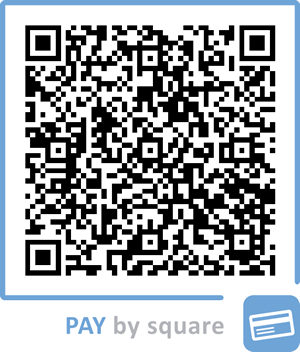
QR code for a donation to the Biela pastelka public collection

Registration

Registration for the Prístupne 2023 conference is closed.

Partners

If you like the idea behind the accessibility conference and would like to become our partner, write to us at konferencia@pristupne.sk.
Slovak Blind and Partially Sighted Union
Teiresiás - Support Centre for Students with Special Needs
Blindrevue - IT technologies for people with visual impairment
Prístupne.sk - all the information you need about accessibility in one place